Cambly
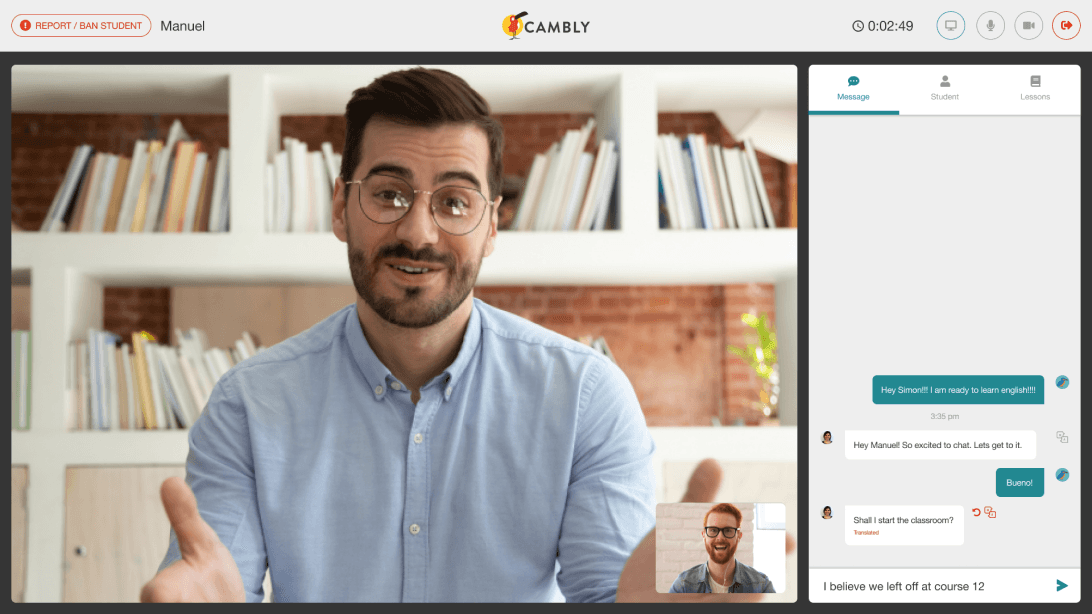
Cambly Classroom: A structured learning system for consistent online English tutoring
Cambly needed a way to deliver consistent teaching quality across thousands of tutors. Students were jumping between different teaching styles, progression was unpredictable, and new tutors struggled without a shared framework. Cambly Classroom introduced a structured curriculum and toolset used during live sessions, improving lesson continuity and overall teaching standards.
ROLE
Product Designer
Team
2 Founders
Product manager
Engineering manager
4 Engineers
Timeline
March 2019 - November 2019
Tools
Figma, Adobe Photoshop, Adobe Illustrator
The Problem
Teaching standards
Cambly’s tutoring experience lacked consistency. Tutors used different methods, students bounced between styles, and popular tutors became overloaded while new tutors struggled. Without a shared curriculum or progression model, Cambly couldn’t scale or guarantee quality.

The Approach
As the first designer at Cambly, I needed a fast, accurate understanding of how live tutoring worked in practice. I partnered with our PM, who had years of education expertise, and conducted interviews with tutors to understand their day-to-day challenges. I also reviewed the existing product end to end to map where teaching inconsistency appeared and why tutors struggled to standardize lessons.
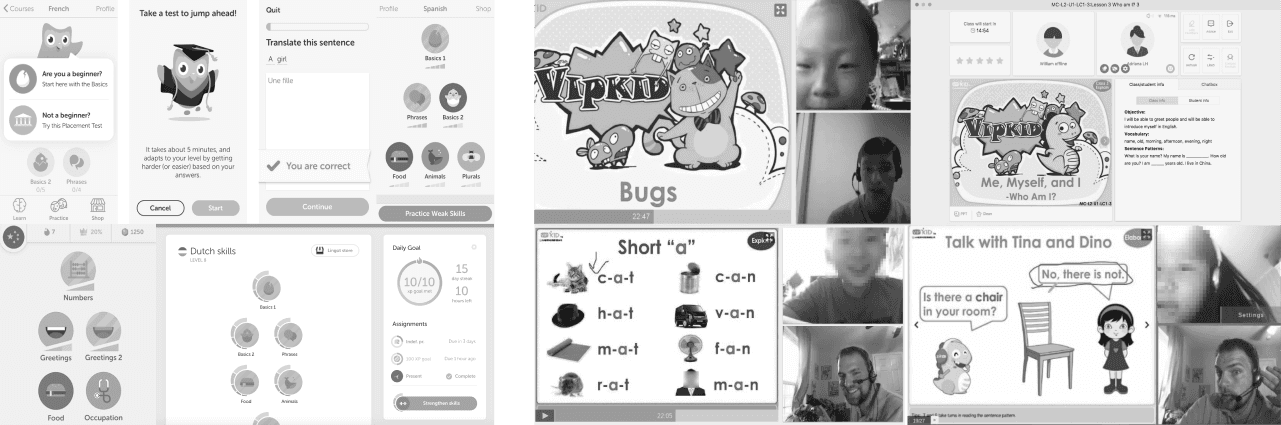
Competitive analysis helped me understand how other platforms structured curriculum, assessment, and progression. These inputs shaped the early direction: build a system that supported real teaching, reduced tutor guesswork, and gave students a consistent sense of progress.
The Discovery
Personalized Learning success
Interviews and product audits revealed that most tutors were improvising their lesson plans. They had no shared baseline for evaluating student skill levels, which made the first session inefficient and created inconsistent progression between tutors. Students described feeling “reset” every time they switched tutors.
These patterns clarified a key requirement: the classroom needed a shared structure that anchored teaching, supported flexible instruction styles, and maintained continuity across any tutor a student matched with.
The Framework
Competitive analysis helped identify gaps and define a scalable interaction model. From this I created design principles to guide the system.
Principles
Progression over Quick Wins.
Foster an environment of continuous learning rather than one-off memories.
Collaborative over Individual.
Promote collaboration and interaction between tutors and students over individual learning.
Empowerment over Automation.
Equip tutors with tools that provide insights into each student's challenges, rather than a rigid one-size-fits-all approach.
Constraints
Technical constraints shaped many early decisions. Tutors often taught from low-resolution laptops and Chromebooks, while students used higher-quality 16:9 displays. Existing course assets were 4:3 images, so the layout had to adapt across mismatched aspect ratios without sacrificing readability or hierarchy.

16:9 vs 4:3 layout exploration
These constraints forced me to prioritize clarity and teachability over visual density. They also influenced our decision to optimize for students first and scale down for tutors, instead of building tutor-first and adjusting upward.
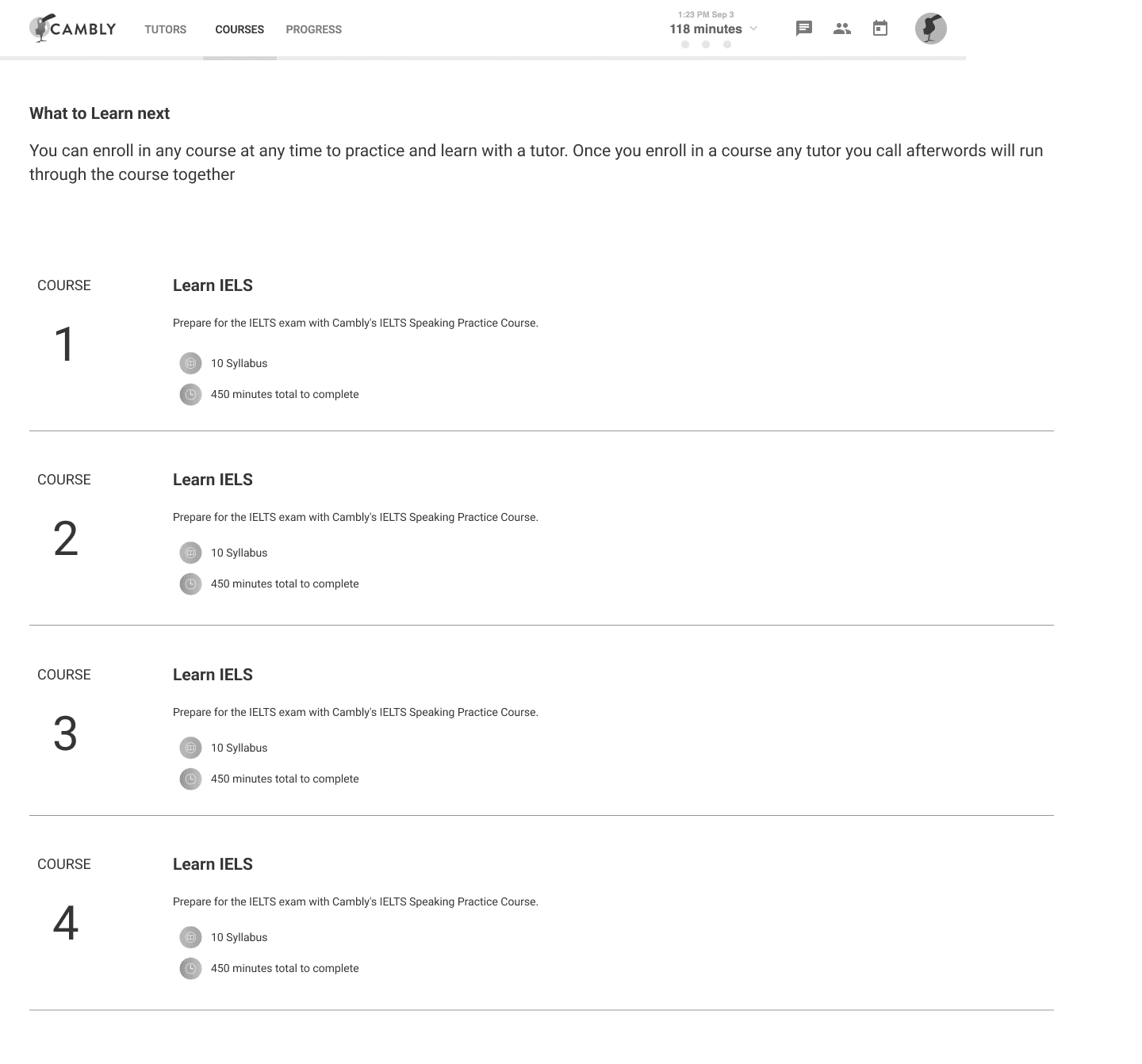
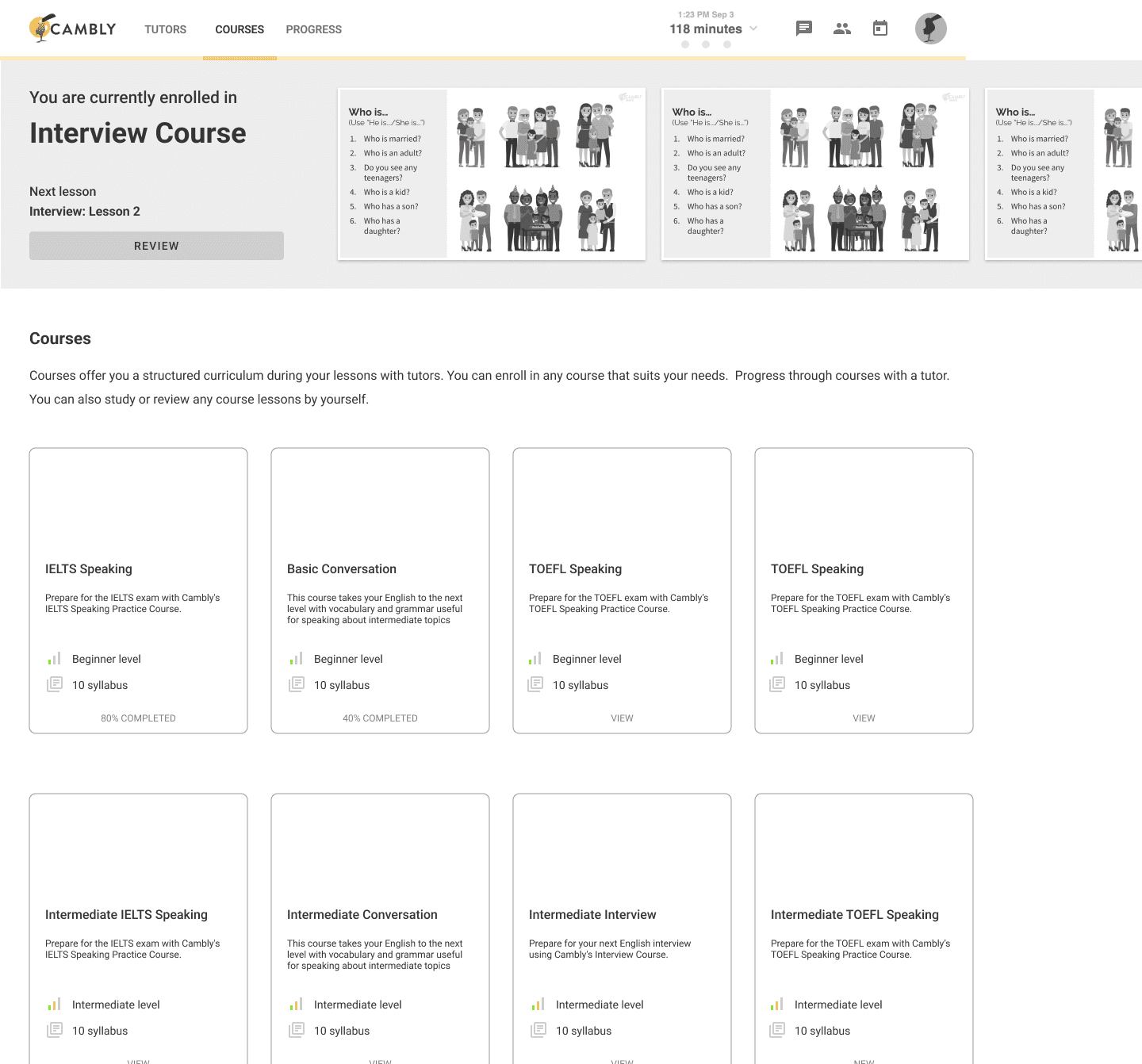
Curriculum and courses
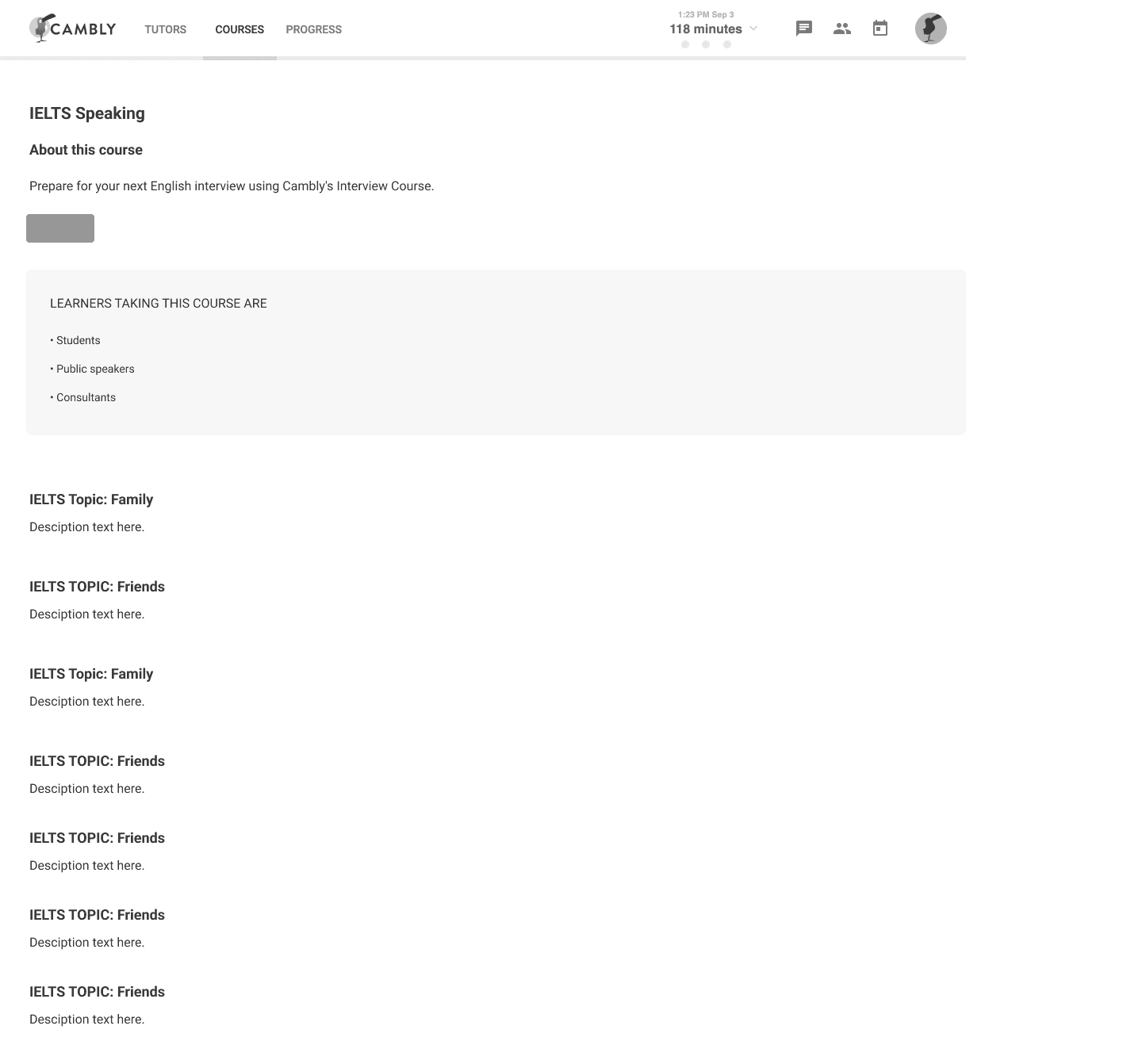
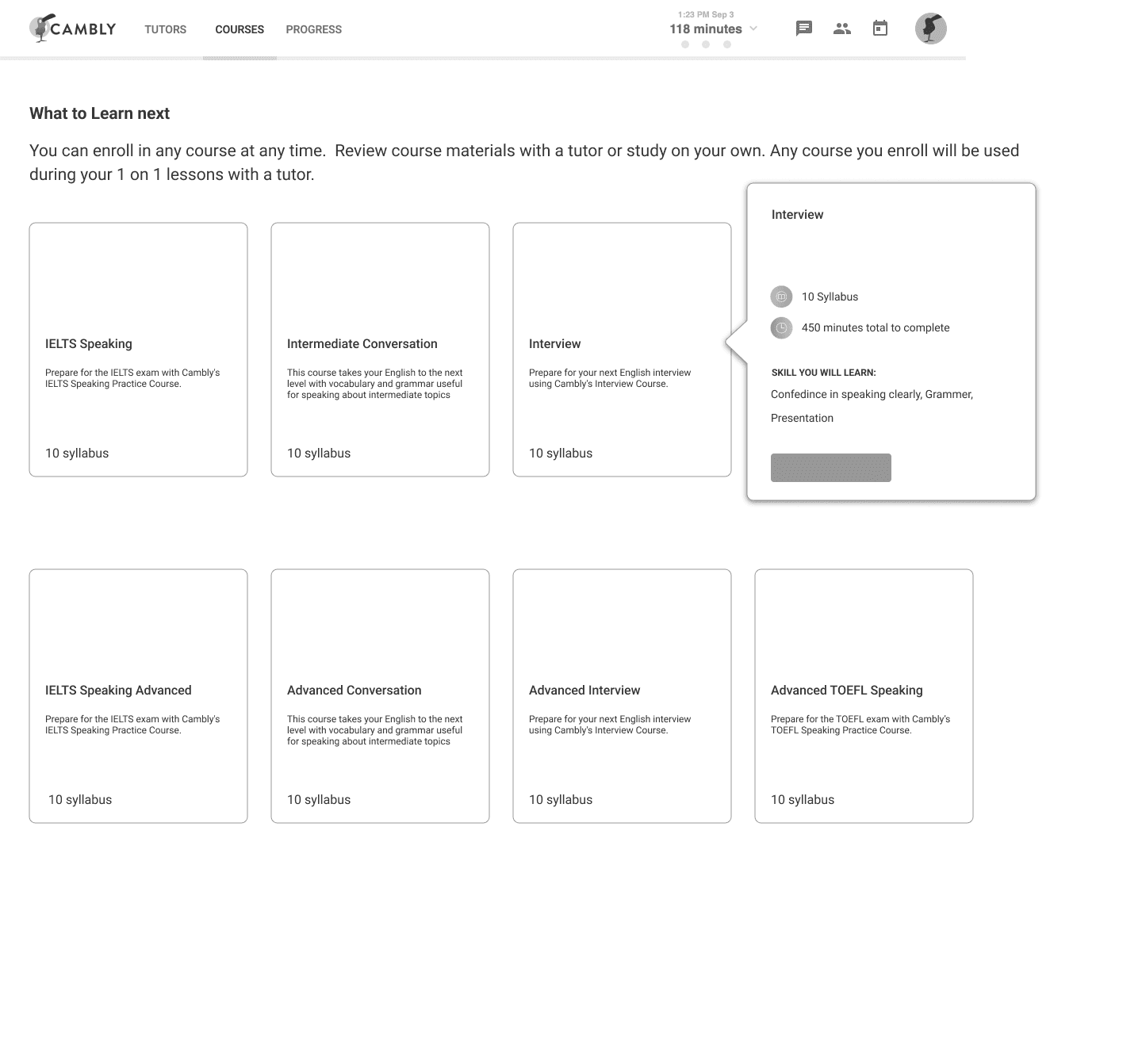
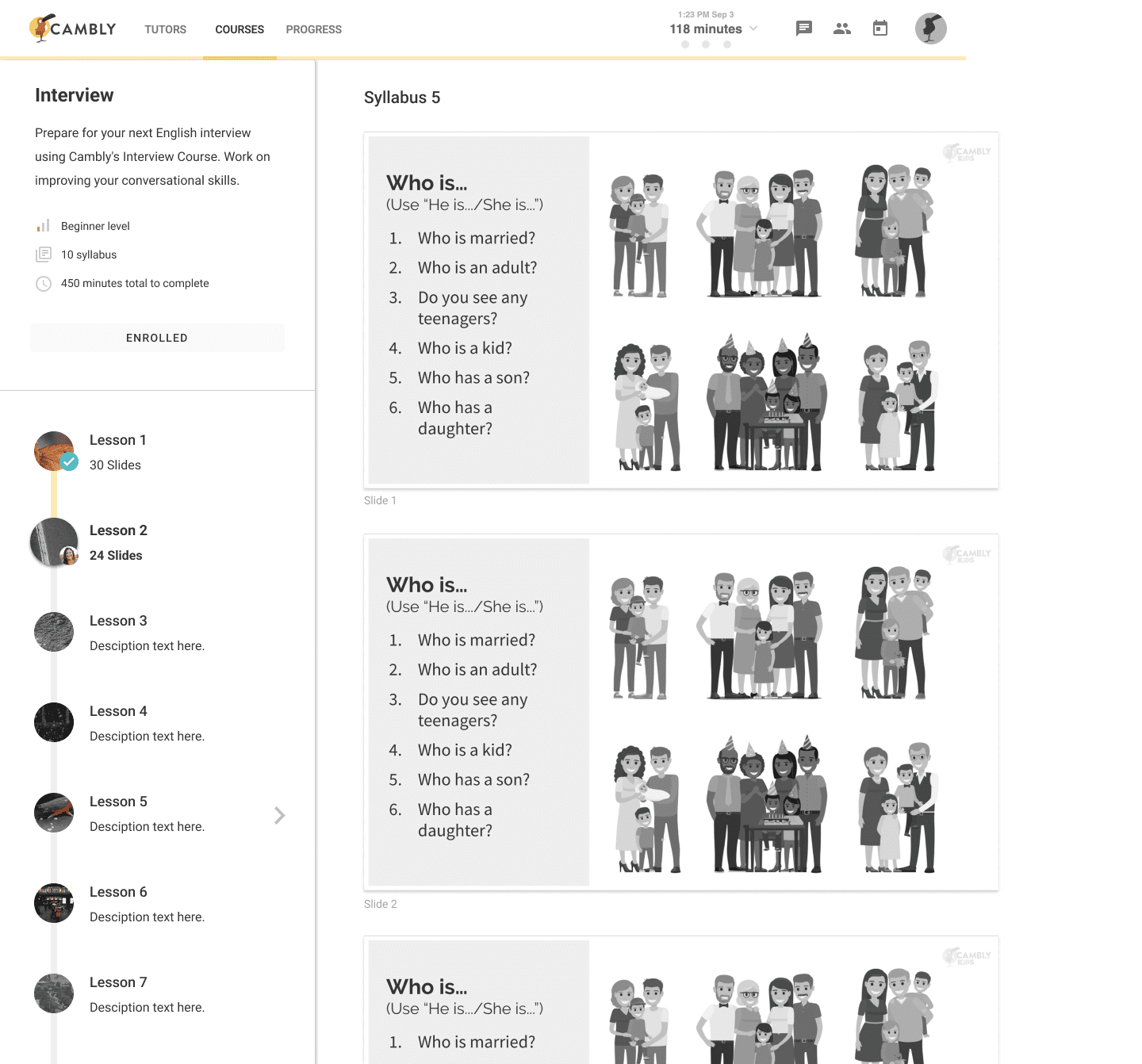
The legacy system wasn’t designed for scaled teaching, so building a fully customized interface wasn’t feasible within our timeline. I leaned on Material Design patterns to establish predictable behaviors and hierarchy while focusing on scalability: the system had to support new courses, new difficulty levels, new media types, and evolving content.
The goal was to create a structure that tutors could rely on session to session, while giving students a clear sense of progression. This informed decisions around list patterns, section hierarchy, and how lessons surfaced during a call.
Learn at your own pace
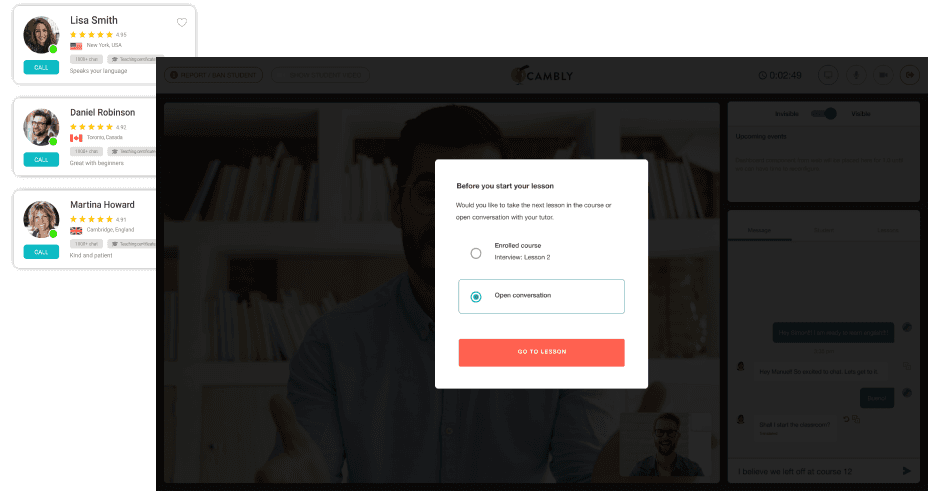
A key failure in the old experience was that students had no influence on what they practiced from tutor to tutor. Allowing students to select lessons before a call created continuity and gave them ownership. Letting them change layouts mid-call disrupted teaching flow, so we restricted layout changes during live sessions.
This balance of student agency before the session and tutor control during the session became a core part of the system.
Prototyping and Development
We had a fixed deadline tied to engineering milestones, so the process required tight collaboration. I tested development builds daily, identified UX issues caused by Vonage API limitations, and adjusted flows to match what was technically achievable. This iterative loop allowed us to refine core interactions, video layout behavior, content visibility, and action timing without slowing engineering momentum.
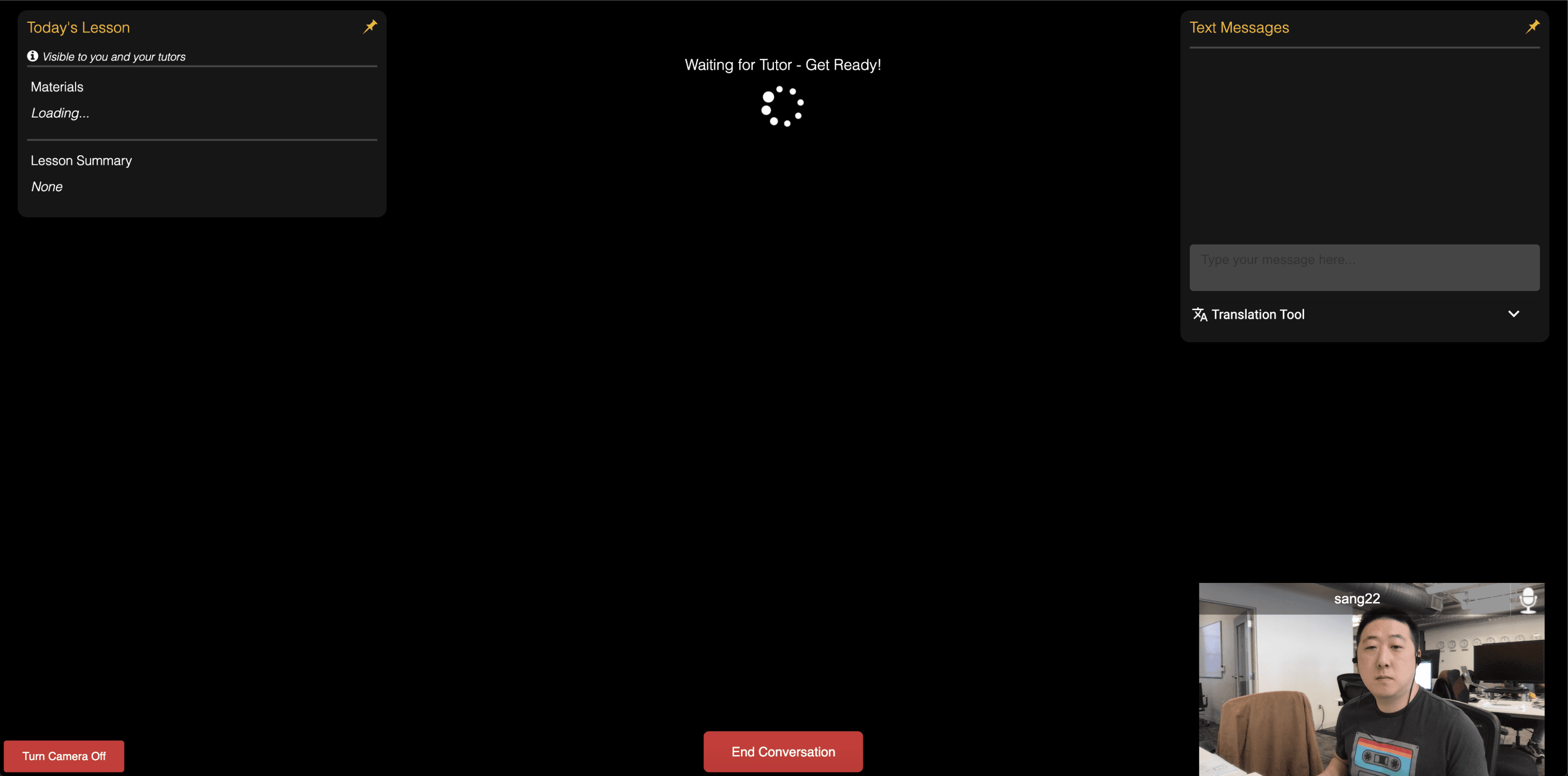
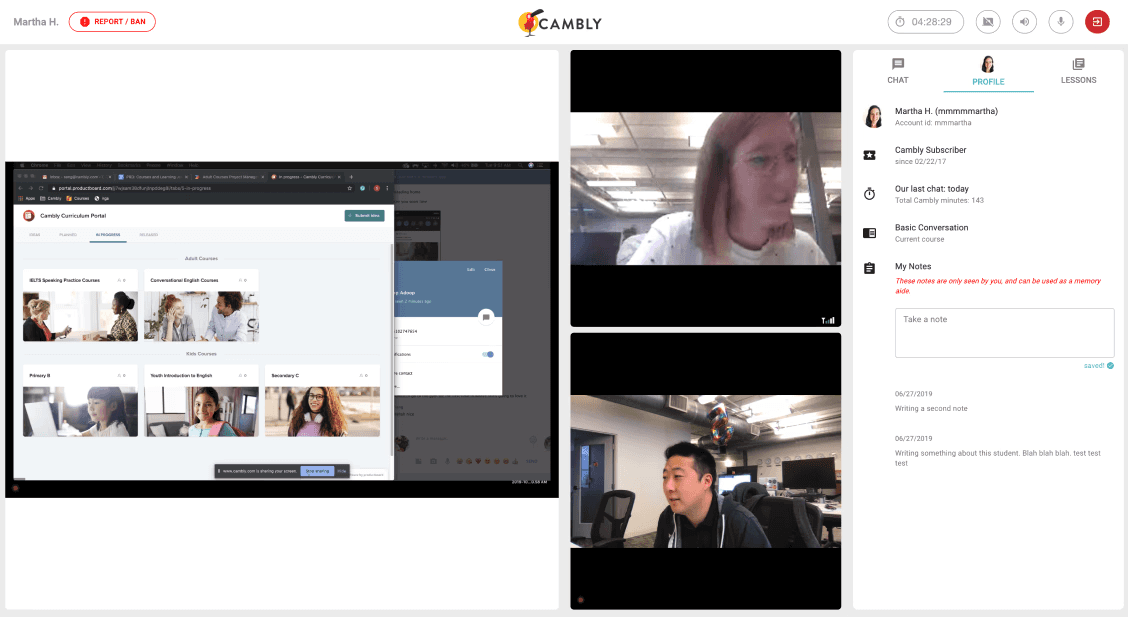
Left: Early Components added, Right: Layout improvements
LIVE TESTING
We ran A/B tests with both new and experienced tutors. Call recordings showed how tutors navigated the classroom, where attention dropped, and where content wasn’t surfacing as intended. These insights helped refine pacing, content density, and interaction timing.

The EXecution
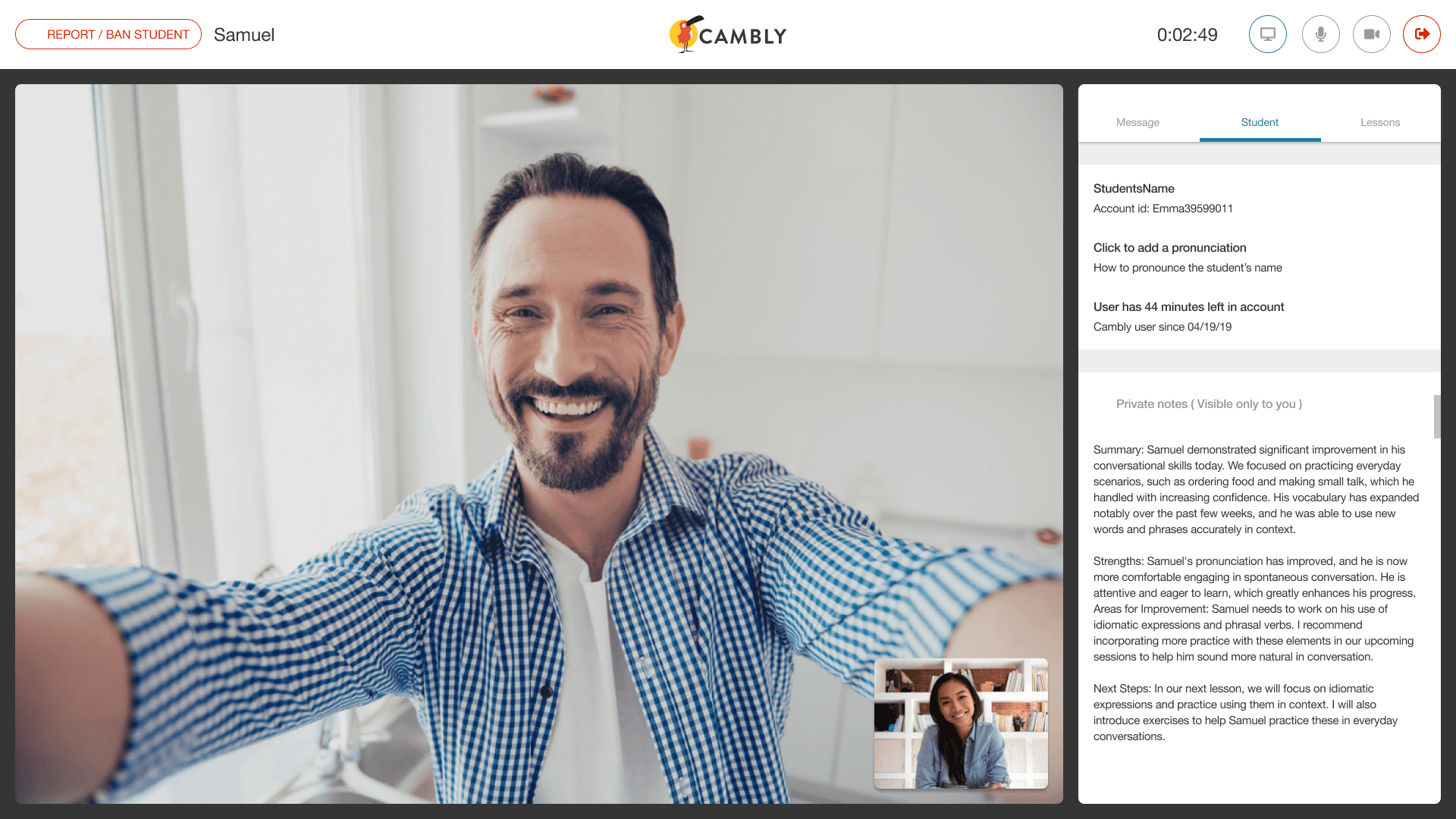
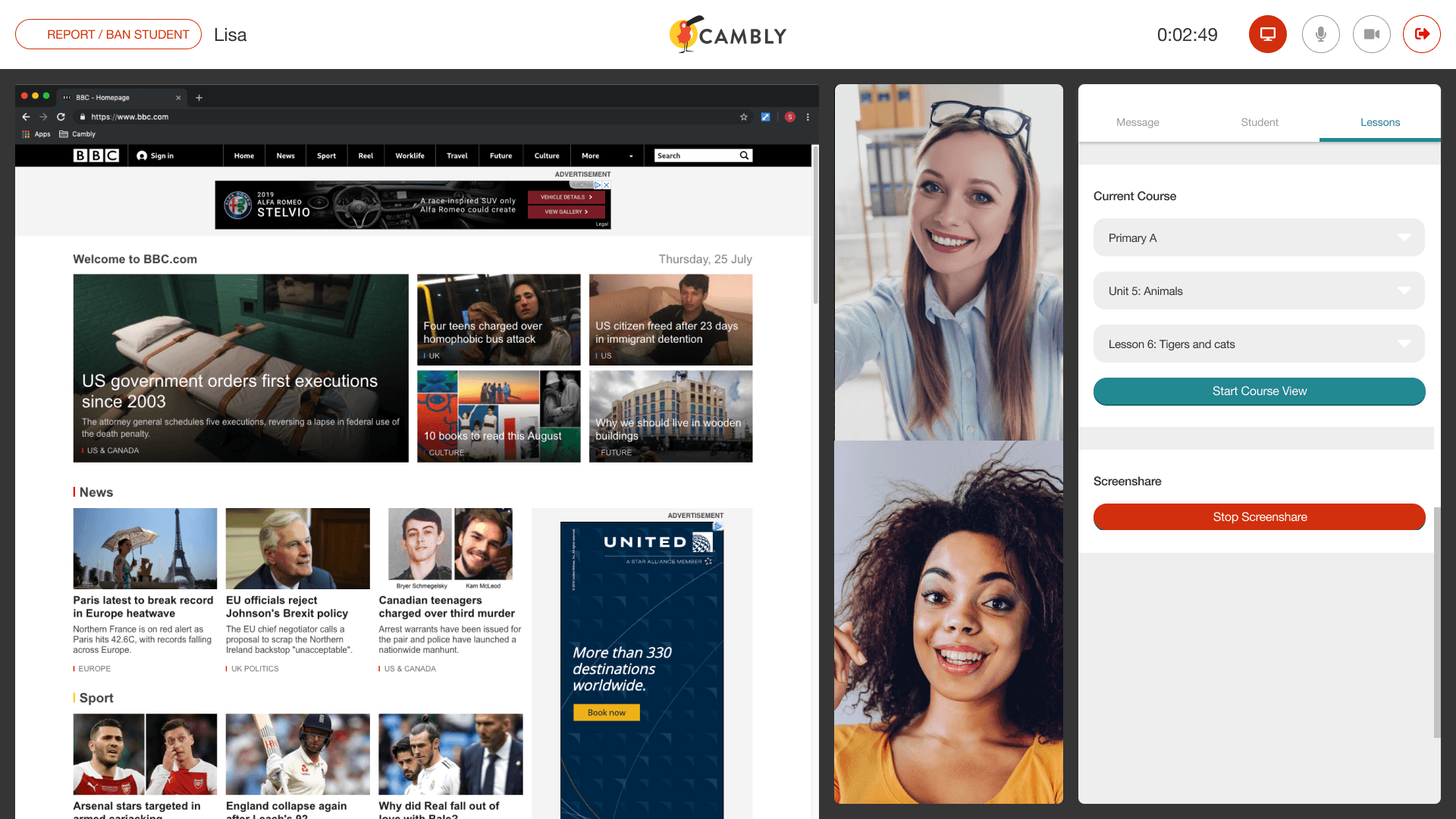
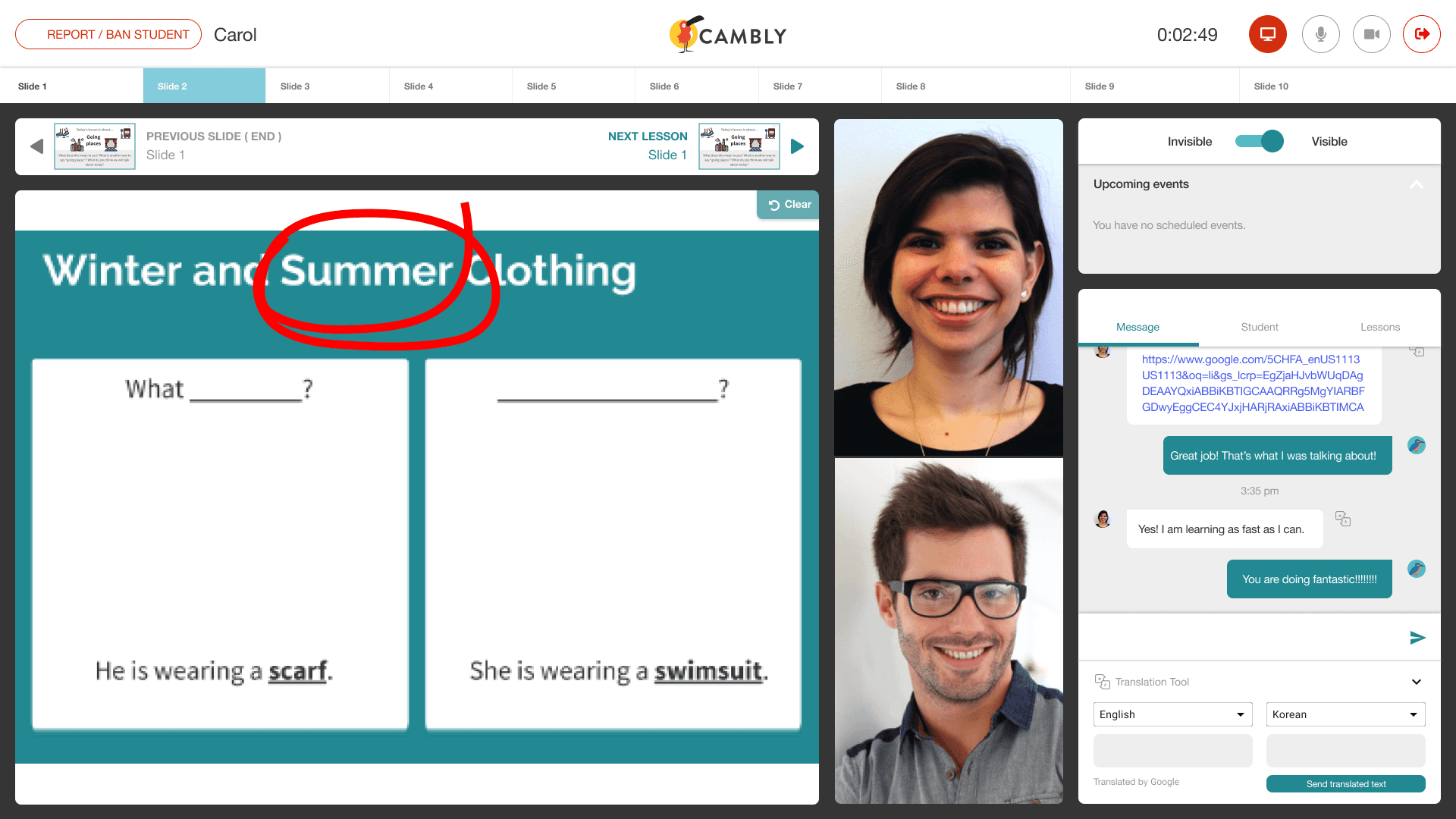
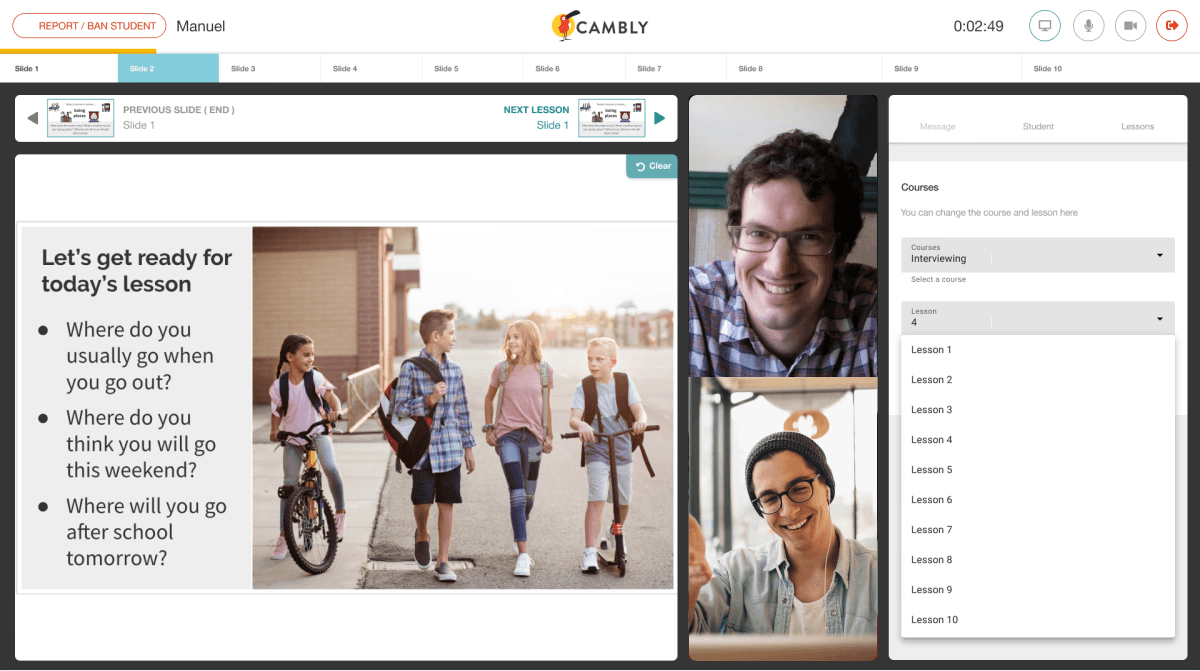
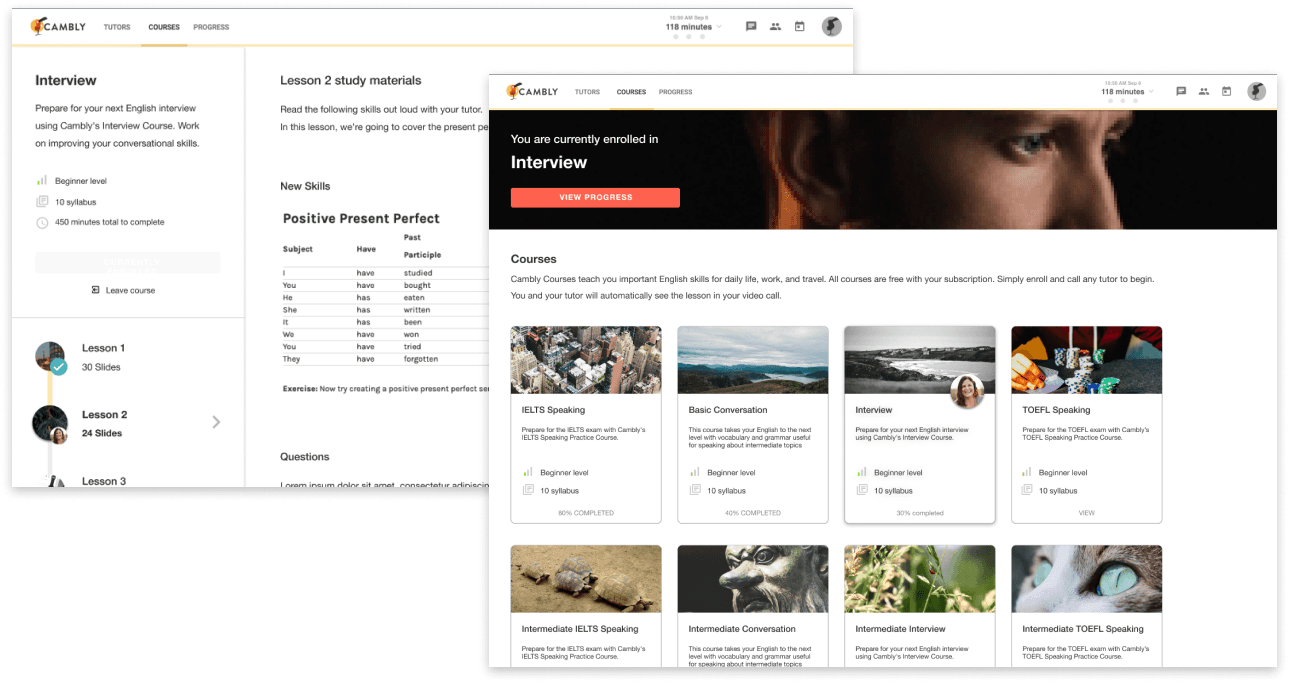
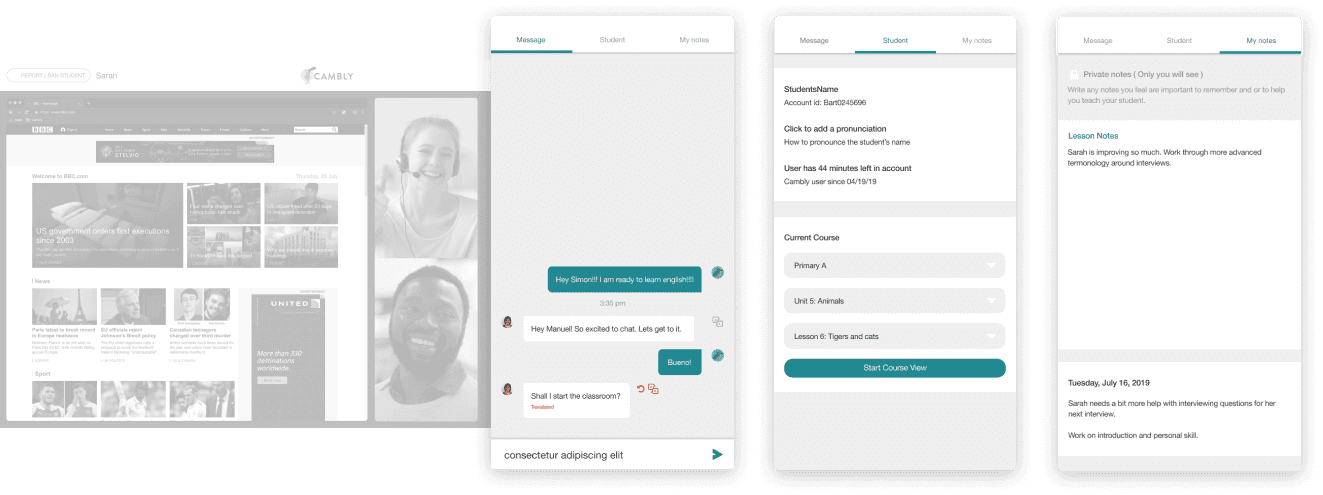
Gallery of Cambly Classroom
The Impact
We launched in 2019, increasing our user engagement and reach, total tutoring sessions per day, and active tutors globally.
33% increase in registered users
60,000+ tutoring sessions per day (free+paid)
6,000+ active tutors
This is a great addition and something I've been wanting since I started! I'm glad they introduced the new classroom!
-tutor: Cambly facebook group
What I like about Cambly is that all the tutors are native English speakers and their high teaching quality. My English has improved a lot and I am having fun studying it!"
-anonymous student